First published 2026
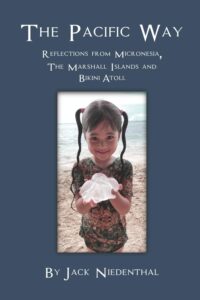
The Pacific WayReflections from Micronesia, the Marshall Islands and Bikini Atoll
For nearly five decades, Jack Niedenthal has lived and worked across Micronesia and the Marshall Islands as a Peace Corps volunteer, teacher, government advisor, filmmaker, journalist and advocate for the people of Bikini Atoll. In The Pacific Way, he brings together a powerful collection of reflections, essays and personal stories that explore the beauty, contradictions and enduring spirit of Pacific island life.
Read moreShow less
From remote outer islands and traditional Marshallese culture to the legacy of nuclear testing, climate change, public health crises, governance, journalism and exile, these essays offer an intimate portrait of a region often misunderstood by the outside world. Written with warmth, honesty and deep personal insight, the book captures both the resilience and the challenges facing Micronesia in a rapidly changing age.
At its heart, The Pacific Way is a meditation on community, family, storytelling, cultural identity and survival. It is a book about what can be learned from societies where human connection still matters more than material wealth, and about the lessons the wider world may yet learn from the islands of the Pacific.
What readers say
“Health care and politics, government corruption and incompetence, the U.S. nuclear tests and their lingering impact, culture and social affairs — Jack does not shy away from any topic. For all their variety, this collection of essays braids a cohesive narrative that offers a grand tour of the Marshall Islands. The Pacific Way is a remarkable book, filled with informative and insightful accounts presented with refreshing candor.”— Mar-Vic Cagurangan, Publisher/Editor-in-Chief, Pacific Island Times
Coming October 2026
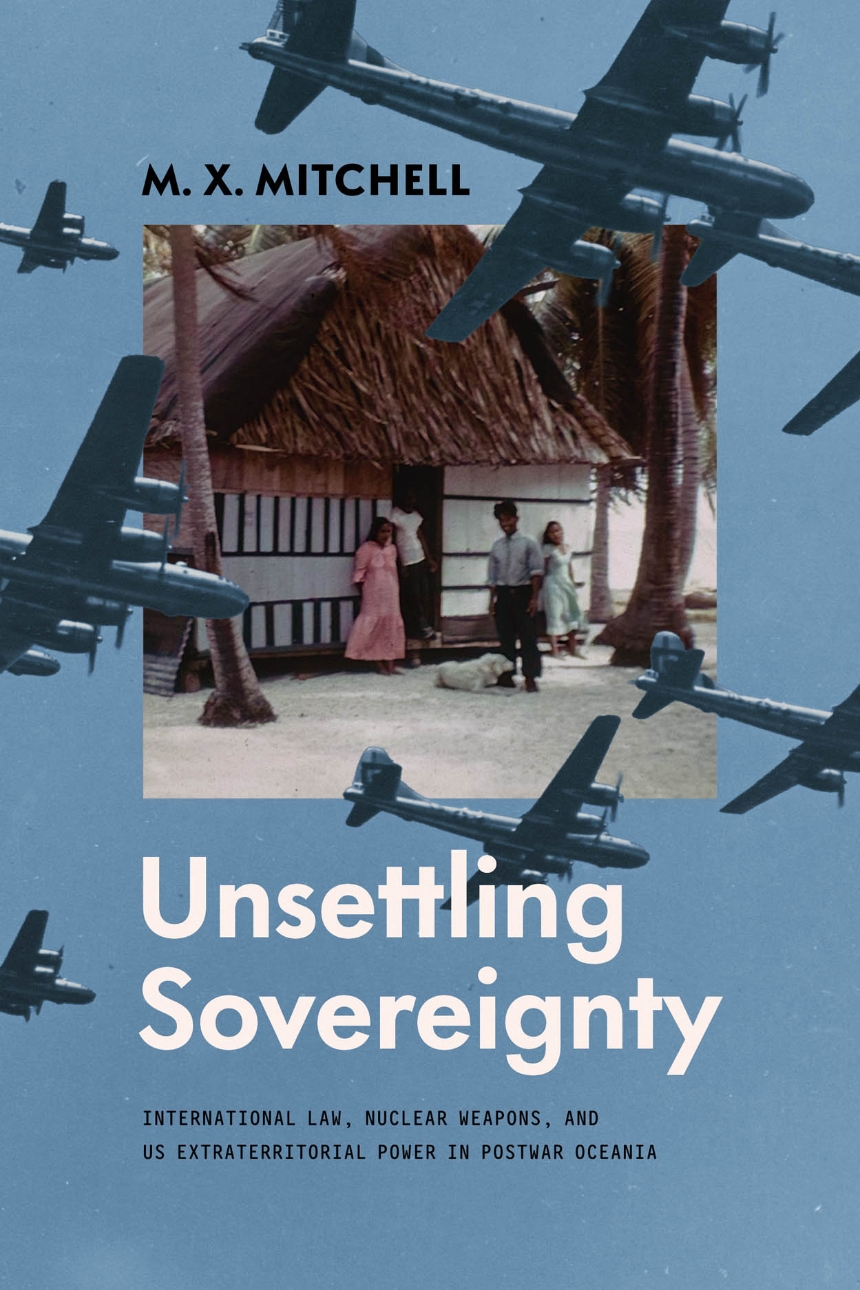
Unsettling SovereigntyInternational Law, Nuclear Weapons, and US Extraterritorial Power in Postwar Oceania
How did the United States get the legal right to explode 67 nuclear weapons in the Marshall Islands? Historian M.X. Mitchell traces the “strategic trusteeship,” a status invented after World War II that gave America military control of the islands without formally annexing them.
Read moreShow less
The book argues that Marshall Islanders, and their lands and waters, played a central part in reshaping U.S. offshore power, state sovereignty and the politics of decolonization, from Marshallese petitions to the United Nations in the 1950s to legal battles that continue today.
First published 2024
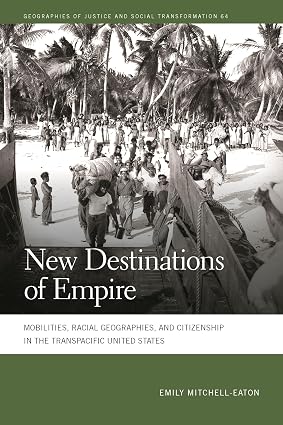
New Destinations of EmpireMobilities, Racial Geographies, and Citizenship in the Transpacific United States
Why did so many Marshallese families make new homes in Springdale, Arkansas? Geographer Emily Mitchell-Eaton follows the migration that grew out of the 1986 Compact of Free Association, which allows Marshallese citizens to live and work in the United States without a visa.
Read moreShow less
Drawing on interviews and archival research in the Marshall Islands, Hawai‘i and Arkansas, the book shows how the Compact ended formal colonial rule while keeping the islands tied to U.S. power, and how that shapes Marshallese lives in the U.S. today, from immigration status and health care to racial politics in a small Southern town. An academic book, but the first full-length study of the Marshallese diaspora in Arkansas.
First published 2022
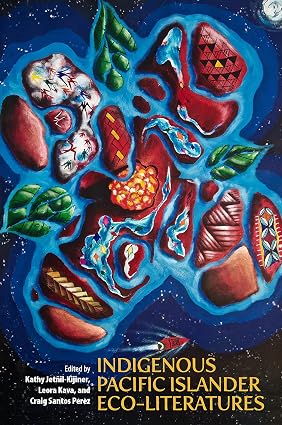
Indigenous Pacific Islander Eco-Literatures
Around 100 Indigenous writers from across Polynesia, Melanesia, Micronesia and the Pacific diaspora come together in this anthology about land, ocean and the living world, co-edited by Marshallese poet Kathy Jetñil-Kijiner.
Read moreShow less
Poetry, fiction, creative nonfiction, visual pieces and drama, in English, Pacific languages and pidgin, are grouped around seven themes: creation stories and genealogies, ocean and waterscapes, land and islands, plants, animals, climate change and environmental justice. The collection celebrates Pacific environments while facing head-on the threats to them, from rising seas to nuclear radiation and military contamination. Published by the University of Hawai‘i Press in its New Oceania Literary Series.
First published 2021
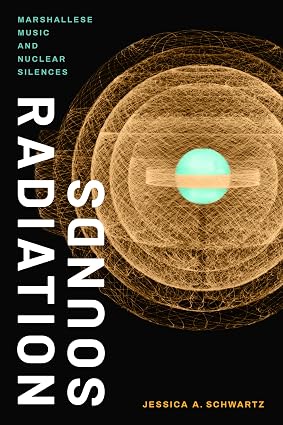
Radiation SoundsMarshallese Music and Nuclear Silences
How have Marshallese people used song to carry the memory of the nuclear tests? UCLA music professor Jessica A. Schwartz traces 75 years of Marshallese singing and shows how music has spoken about radiation, illness and loss when official records stayed silent.
Read moreShow less
The book centers on the communities affected by the 1954 Castle Bravo test at Bikini Atoll, whose people were exposed to fallout and then made subjects of a classified medical study. It is a scholarly work, but a rare one in giving Marshallese voices, quite literally, center stage. It was co-winner of the 2022 Edie Turner Prize from the Society for Humanistic Anthropology.
What readers say
“In this fascinating ethnography of singing as a sonic politics of Indigenous postcolonial identity, Jessica A. Schwartz reveals the intimate historical relations between aurality and nuclear war.”— David Novak, author of Japanoise
First published 2021
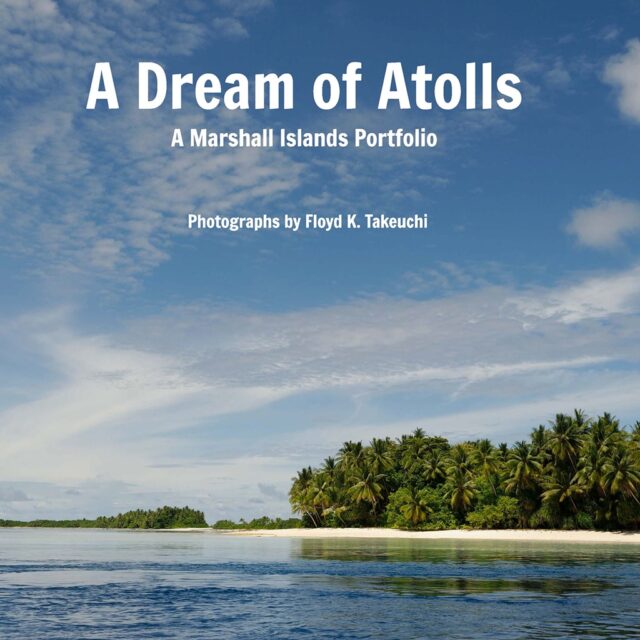
A Dream of AtollsA Marshall Islands Portfolio
Described as a “love letter to the islands of his birth,” A Dream of Atolls is writer-photographer Floyd K. Takeuchi’s first book about the Marshall Islands made up solely of photos taken by the veteran journalist.
Read moreShow less
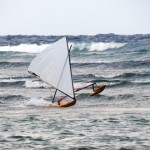
It’s a large coffee table book featuring 26 of Takeuchi’s photographs of Majuro and Jaluit Atolls. The subjects range from islets framed by endless sky and glassy seas to a large, ocean-going Marshallese canoe under sail, to residents of Jabor, Jaluit, captured in an impromptu photo studio Takeuchi set up on the outside walkway of the Lieom Jaluit Hotel.
“There’s a delicate beauty to the Marshall Islands,” says Takeuchi, whose parents, Clarence and Sachiko Takeuchi of Hawaii, worked for the Trust Territory on Majuro during most of the 1950s. The family lived on Saipan from 1964 to 1982. “Unlike high islands, which often have waterfalls and dramatic mountain peaks, atolls quietly make their beauty felt. It might be in how a palm frond casts its shadow, or the sound of surf breaking on a distant fringing reef,” he said.
Blurb delivers to the Marshall Islands, and you can preview the whole book free on the Blurb site.
First published 2021
Blown to HellAmerica’s Deadly Betrayal of the Marshall Islanders
The most important place in American nuclear history is the Marshall Islands, an idyllic Pacific paradise that served as the staging ground for over sixty US nuclear tests. It was here, from 1946 to 1958, that America perfected the weapon that preserved the peace of the post-war years. It was here, with the 1954 Castle Bravo test over Bikini Atoll, that America executed its largest nuclear detonation, a thousand times more powerful than Hiroshima.
Read moreShow less
And it was here that a native people became unwilling test subjects in the first large scale study of nuclear radiation fallout when the ashes rained down on powerless villagers, contaminating the land they loved and forever changing a way of life.
In Blown to Hell, Pulitzer Prize-winning journalist Walter Pincus tells the tragic story of the Marshallese people caught in the crosshairs of American nuclear testing. From John Anjain, a local magistrate of Rongelap Atoll who loses more than most; to the radiation-exposed crew of the Japanese fishing boat the Lucky Dragon; to Dr. Robert Conard, a Navy physician who realized the dangers facing the islanders and attempted to help them; to the Washington power brokers trying to keep the unthinkable fallout from public view… Blown to Hell tells the human story of America’s nuclear testing program.
Displaced from the only homes they had known, the people who had lived on the serene Pacific atolls for millennia before they became ground zero for America’s first thermonuclear detonations returned to homes despoiled by radiation, if they were lucky enough to return at all. Others were ripped from their ancestral lands and shuttled to new islands with little regard for how the new environment supported their way of life and little acknowledgement of all they left behind. But not even the disruptive relocations allowed the islanders to escape the fallout.
About the author
Walter Haskell Pincus (born December 24, 1932) is a national security journalist. He reported for The Washington Post until the end of 2015. His prizes include a Polk Award in 1977, a television Emmy in 1981, a shared 2002 Pulitzer Prize for National Reporting with five other Washington Post reporters, and the 2010 Arthur Ross Media Award from the American Academy for Diplomacy. Since 2003, he has taught at Stanford University’s Stanford in Washington program.
First published 2021
Our Ocean’s PromiseFrom Aspirations to Inspirations: The Marshall Islands Fishing Story
Our Ocean’s Promise traces the evolution of Marshall Islands fisheries development and administration from its embryonic stages in the 1970s to becoming one of the most progressive and forward looking in the Pacific island region.
Read moreShow less
The nation has gone from being a bystander selling a few licenses so distant water fishing nation fleets could reap the benefits to playing a key role in the Parties to the Nauru Agreement group that controls ocean waters where over half the world’s skipjack tuna is caught. Since 2010, the Marshall Islands Marine Resources Authority has seen commercial tuna fisheries revenue increase 10-fold while implementing a world-recognized conservation and management regime that, together with its partners in the PNA, is maintaining catch levels for all four tuna species at sustainable levels.
The narrative details the development of the commercial tuna fishery in the Marshall Islands and new efforts to engage in many aspects of the tuna “value chain,” from the catch to delivery of tuna products to retailers. The book includes a detailed chronology that highlights national and regional fisheries milestones. Available in Kindle and print editions.
About the author
Giff Johnson has lived and worked in the Marshall Islands since the mid-1980s. He edits the weekly Marshall Islands Journal and is a regular contributor to several regional and international news media.
First published 2019
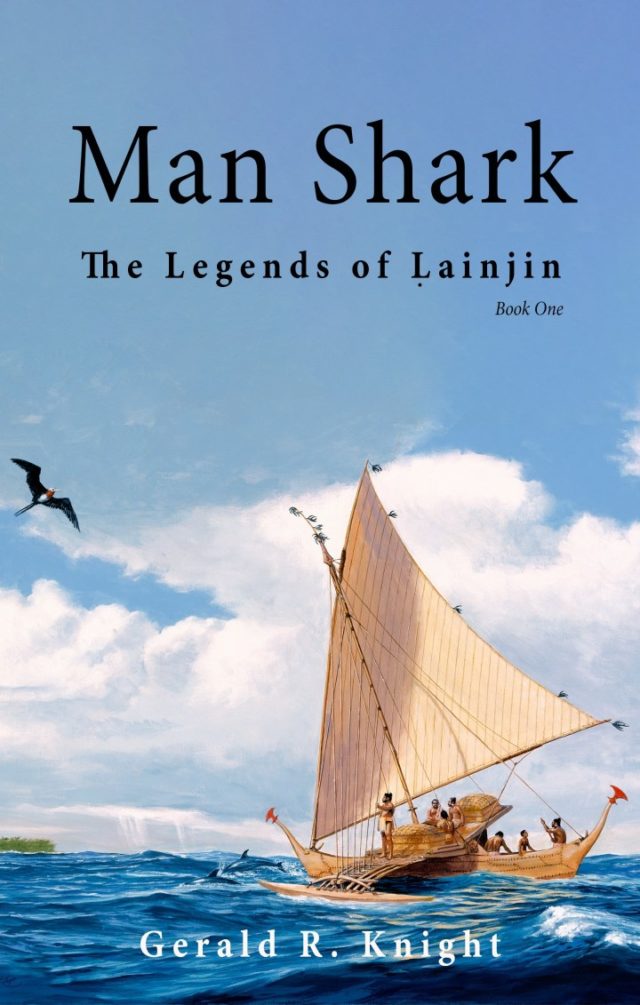
Man SharkThe Legends of Ḷainjin, Book One
The Legends of Ḷainjin is a trilogy of historic literary fiction based on the primordial oral literature of Pacific Islanders. There is one story that uncharacteristically has no ending: the story of Tarmālu and her son Ḷainjin. According to legend, she leaves her baby in the care of others as she leads her fleet of proas from the shelter of the Wōtto Atoll lagoon into the open ocean to save their craft from the certain destruction of an oncoming typhoon.
Read moreShow less
The trilogy is the story of Ḷainjin’s search for his mother, his love affair on Lae, and the rise of Ijokelekel and the fall of the Saudeleur rulers of Nan Madol, a National Historic Landmark built of hexagonal basaltic crystals upon an eastern reef off Pohnpei, Federated States of Micronesia. Man Shark is the first book in the series to be published. The story line picks up upon Ḷainjin’s return from his search. It is a simple triangular love story that takes place on prehistoric Lae Atoll. Book two is the prequel and book three completes the series.
About the author
Gerald was only 19 when he entered the Peace Corps in 1967 after two years as a literature student at Albion College. After graduation he returned to the Marshall Islands with a love for literature and an interest in transcribing the stories he had heard in previous years. He taught for a year and worked as a commercial fisherman for two, honing his knowledge of the language and culture. Then he went for an uninterrupted four-year stay on remote Rongelap Atoll to study with the renowned traditional navigators and storytellers there. In 1979 he attended a one-year apprentice program at the Bishop Museum in Honolulu to prepare as Director of the Alele Museum and National Archive. He held that position for ten years, culminating in a two-year collaboration with the Field Museum of Natural History on their permanent “Traveling the Pacific” exhibit, which features a donated traditional outrigger canoe. In 1999 Gerald graduated from the University of Illinois with master’s degrees in business administration and accounting. He heads a CPA tax practice in Palos Hills, Illinois, has completed the Chicago–Mackinac Island race five times and has been a member of the Columbia Yacht Club since 2005. See more of Gerald’s work at geraldrknight.com.
First published 2019
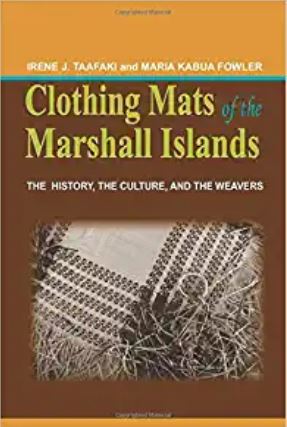
Clothing Mats of the Marshall IslandsThe History, the Culture and the Weavers
Finely woven, intricately and symbolically patterned mats known as jaki-ed are a cultural treasure of the Marshallese people. They are the expression of kōrā im an kōl, an attribute bestowed on Marshallese women at birth that grants them the opportunity to develop their unique talent and creativity. This form of creative expression is being revived through contemporary jaki-ed.
Read moreShow less
Once used for clothing (neided) as well as other ceremonial and domestic purposes, the weaving of jaki-ed became an endangered art: mass-produced cloth replaced the neided. The last clothing mats were woven in the Marshall Islands during World War II when commercial ships, unable to enter the Pacific theater of war, could no longer deliver cotton fabric. Post-war economic and social factors perpetuated the loss of traditional knowledge and cultural systems that characterized Marshallese society since the islands were first settled over two thousand years ago. This included knowledge of the traditional methods of weaving jaki-ed and the cultural meanings of the complex and decorative designs.
In Clothing Mats of the Marshall Islands, the authors capture more than 10 years of research into jaki-ed as part of a program to collaborate with weavers and revive this form of cultural expression. Basing designs on their own creative vision, weavers now use traditional patterns as inspiration for modern expressions. While jaki-ed are no longer worn as clothing, the mats are now being collected as outstanding examples of cultural creativity.
First published 2018
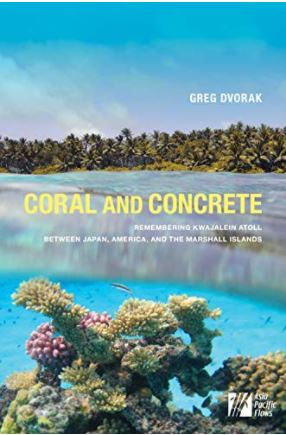
Coral and ConcreteRemembering Kwajalein Atoll between Japan, America, and the Marshall Islands
Dvorak’s cross-cultural history of Kwajalein Atoll explores intersections of environment, identity, empire and memory in the largest inhabited coral atoll on earth. Approaching the multiple “atollscapes” of Kwajalein’s past and present as Marshallese ancestral land, Japanese colonial outpost, Pacific War battlefield, American weapons-testing base, and an enduring home for many, Dvorak delves into personal narratives and collective mythologies from contradictory vantage points.
Read moreShow less
He navigates the tensions between “little stories” of ordinary human actors and “big stories” of global politics, drawing upon the “little” metaphor of the coral organisms that colonize and build atolls, and the “big” metaphor of the all-encompassing concrete that buries and co-opts the past.
About the author
Greg Dvorak is a professor of history and culture in the Pacific and Asia based at Waseda University in Tokyo. Born in Philadelphia in 1973 and having spent his childhood in Kwajalein Atoll, later growing up in both the United States and Japan, he has resided in Tokyo for most of his adult life.
First published 2017
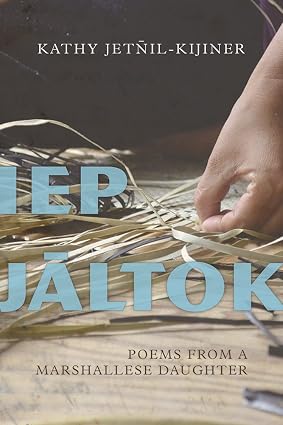
Iep JāltokPoems from a Marshallese Daughter
The acclaimed debut poetry collection of Kathy Jetñil-Kijiner, who read her poem “Dear Matafele Peinam” to world leaders at the 2014 United Nations Climate Summit. She writes about family, identity, the nuclear testing legacy, life in the diaspora and the threat of rising seas to her islands.
Read moreShow less
Iep jāltok is a basket whose opening faces the speaker, a Marshallese term for a daughter, who carries the family line. The poems move between Majuro and Hawai‘i, English and Marshallese, the personal and the political, and they read powerfully aloud as well as on the page. Published by the University of Arizona Press in its Sun Tracks series of Indigenous literature.
First published 2016
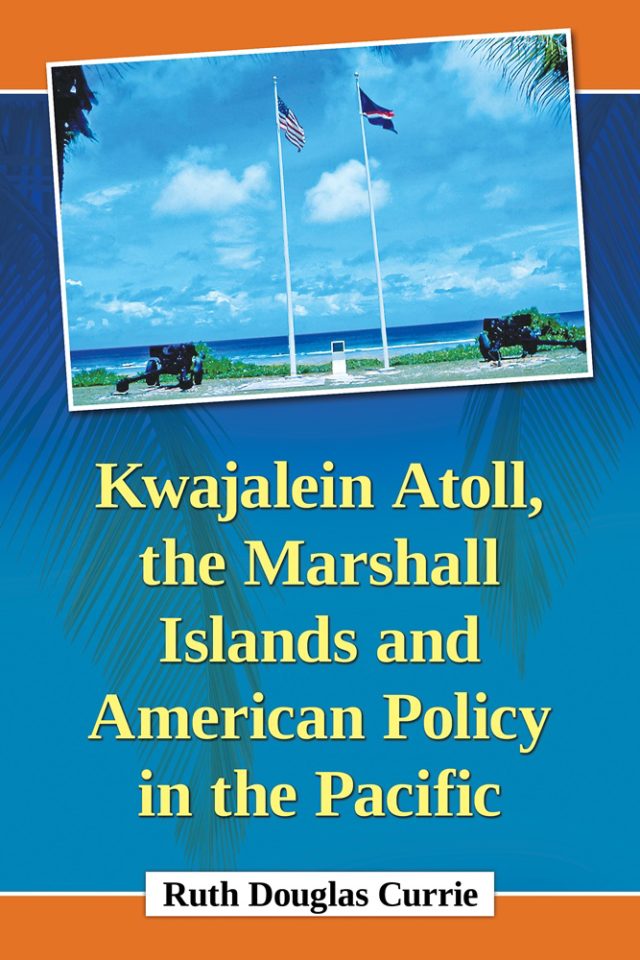
Kwajalein Atoll, the Marshall Islands and American Policy in the Pacific
For centuries, the Marshall Islands have been drawn into international politics, primarily because of their central location in Oceania. After World War II they came into the American sphere as part of the Trust Territory of the Pacific Islands. At the outset of the Cold War, the Marshalls were a site for nuclear tests and later for the US Army’s ballistic missile testing as part of President Reagan’s Strategic Defense Initiative.
Read moreShow less
This book focuses on the islanders’ tenacious negotiations for independence and control of their land, accomplished as the Republic of the Marshall Islands in a Compact of Free Association with the U.S. The creation of American policy in the Pacific was a struggle between the US departments of the Interior and State, and the military’s goals for strategic national defense, as illustrated by the case of the Army’s base at Kwajalein Atoll.
What readers say
“Currie provides an excellent, archive-driven, micro-historical approach of a multilayered analytical critique of US foreign policy in the Pacific… An excellent read, well written, closely studied, and expertly documented… essential.”— Choice
“A welcome addition to the sparse library of books about this region… meticulous… valuable… worth reading.”— The Marshall Islands Journal
“Dr. Currie captures the definitive history of the Marshallese nation’s special relationship with the U.S. which helped secure America’s interests in the Pacific, and the struggle to preserve their culture over a century of colonialism and Great Power domination.”— John Fairlamb, Office of Compact Negotiations, U.S. Department of State, 1999–2004
About the author
Ruth Douglas Currie is a professor emerita in the History Department, Appalachian State University. She served four years as command historian, U.S. Army Strategic Defense Command, and recently retired as a professor of history and political science at Warren Wilson College in Asheville, North Carolina.
First published 2016
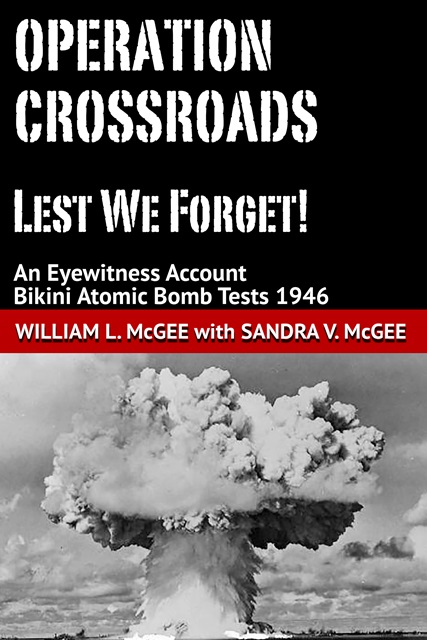
Operation Crossroads — Lest We Forget!An Eyewitness Account, Bikini Atomic Bomb Tests 1946
In July 1946, William L. McGee, USN, witnessed Operation Crossroads from the deck of the heavy cruiser USS Fall River (CA-131), flagship for the Target Fleet of Admiral W.H.P. Blandy’s Joint Task Force One. McGee’s book was released in June 2016 to coincide with the 70th anniversary of the postwar nuclear tests at Bikini Atoll.
Read moreShow less
“I wrote this book to help preserve a part of history few know about today,” says McGee. “If your time is limited, I recommend you read the Foreword written by Dr. F. Lincoln Grahlfs, a Crossroads participant and Vice Commander of the National Association of Atomic Veterans (NAAV). Also Chapter 11, ‘Later Lessons Learned,’ with the research and findings of two of the nation’s leading authorities on the dangers of radiation inherent in nuclear weapons — Dr. Oscar Rosen, a Crossroads participant and an advocate for atomic veterans, and Jonathan M. Weisgall, the legal representative of the people of Bikini Atoll since 1975.”
It’s a quick read at 132 pages, with 59 photographs and illustrations.
First published 2015
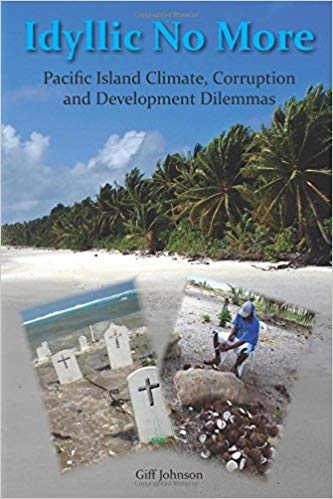
Idyllic No MorePacific Island Climate, Corruption and Development Dilemmas
An excellent resource on the Pacific region today by Giff Johnson, editor of the Marshall Islands Journal. Giff asks: “Can Pacific nations, endowed with islands of travel poster beauty, vibrant cultures, and centuries old ways of life based on sustainable practices, hurdle significant development and political challenges they face today — in addition to withstanding climate change and rising sea levels?”
Read moreShow less
In a series of essays about the looming climate threat, sustainable development and the region’s multi-billion dollar tuna industry, the U.S. nuclear test legacy in the Marshall Islands, and the impact of out-migration, Idyllic No More addresses the often difficult problems and choices facing the Pacific islands today.
What readers say
“Giff Johnson provides deep insight based on his many years of living, traveling and writing in the Marshall Islands and the Pacific. This book is made up of a series of short articles that examine the many challenges that RMI (Republic of Marshall Islands) and other Pacific island nations face. If you know nothing about Micronesia and small island Pacific states, you’ll come away much richer for having read this. If you already know about this part of the world, you’ll understand it much better.”— Jon D. Letman, Amazon review
First published 2013
Don’t Ever WhisperDarlene Keju: Pacific Health Pioneer, Champion for Nuclear Survivors
The powerful story of a woman who championed the cause of nuclear weapons test survivors when others were silent, and who later implemented unparalleled community health programs that gave hope to a generation of troubled youth.
Read moreShow less
Don’t Ever Whisper is the stirring account of Marshall Islander Darlene Keju’s struggle to gain an American education and to use that education first to expose to the world a United States government cover-up of its nuclear weapons testing program in her islands. The book was written by Darlene’s husband Giff Johnson, editor of the weekly Marshall Islands Journal.
What readers say
“I was privileged to know Darlene. She was a joyous being, who cared deeply about people. Her wonderful ideas to help young people to help themselves grow and appreciate themselves and their community are truly a practical model for all world communities to implement. Darlene was an amazing being for our times. I urge you to read ‘Don’t Ever Whisper’ and become inspired in your own life and in your own community!”— E.J. Probst, Amazon review
First published 2013
The Lost Art of Finding Our Way
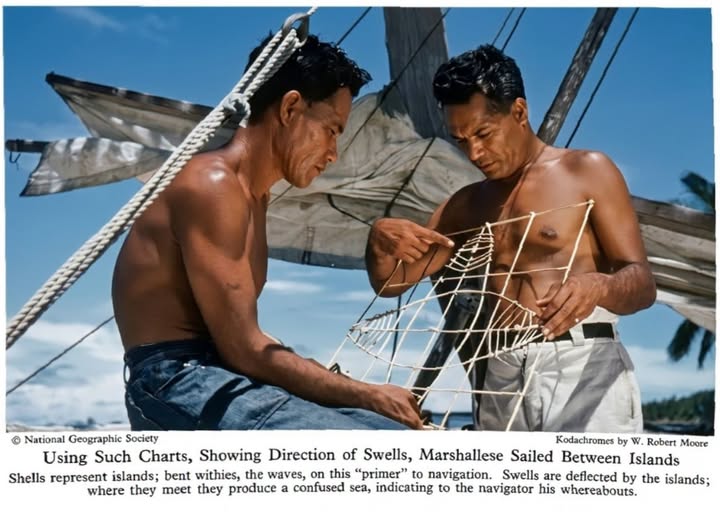
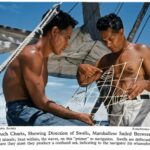
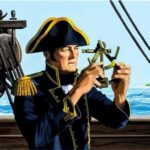
Marshall Islands wave piloting is one of the navigation techniques featured in Harvard science professor John Huth’s book. Professor Huth told Radio New Zealand in March 2017 that his research found the use of ocean swells to navigate was extremely accurate, and that he wants to further document traditional Marshallese navigation to help boost the islands’ indigenous culture.
Read moreShow less
“I almost have in my mind that we want to publish a wave piloting manual or something like that, that we could give back to the Marshallese to allow them to reclaim their heritage. Because I think it’s a very rich heritage,” Professor Huth said.
What readers say
“A sailor friend recommended this. I found it consistently surprising and enjoyable. My wife got tired of me telling her all the tidbits.”— Tim Ricks, Amazon review
First published 2012
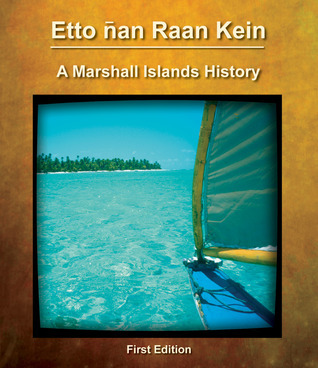
Etto ñan Raan KeinA Marshall Islands History
The go-to history of the Marshall Islands, written for Marshallese students and anyone else who wants the whole story in one place. It runs from the first voyagers who settled the atolls, through traditional society and navigation, the arrival of missionaries and traders, the German, Japanese and American eras and the nuclear testing years, to self-government and the Compact of Free Association.
Read moreShow less
Written with Marshallese co-authors. Co-author Dr. Hilda Heine later became President of the Republic of the Marshall Islands.
First published 2010
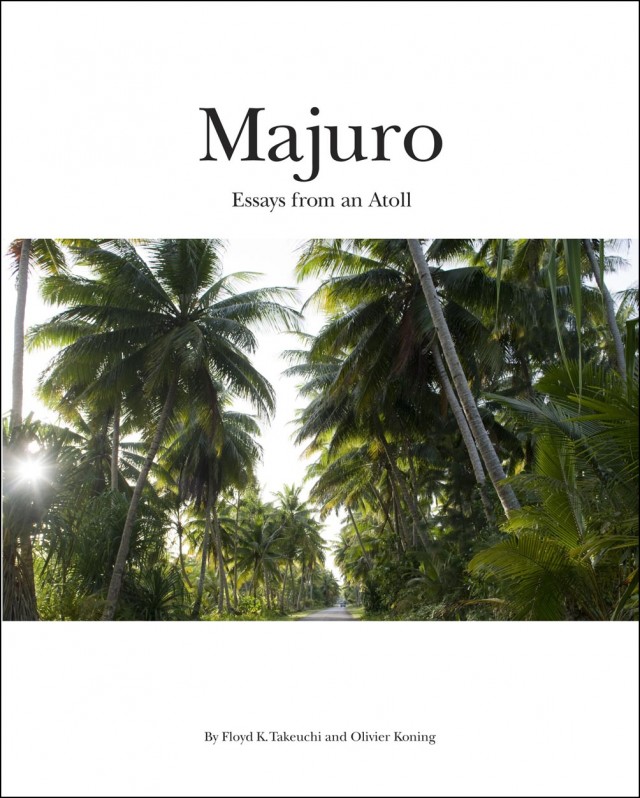
Majuro: Essays from an Atoll
Seven essays and accompanying photographs about the Marshall Islands, one of the undiscovered destinations for travelers looking for unique experiences in the Pacific. The stories look at contemporary life in the Marshall Islands: handicraft arts and culture; the revival of a traditional canoe culture; the growing use of local foods on restaurant menus; some of the best deep-sea sport fishing anywhere; the strength of local churches; private and affordable “get away islands”; and portraits of islanders.
Buy on Amazon ↗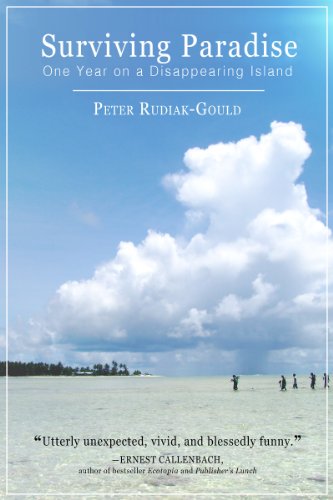
First published 2009
Surviving ParadiseOne Year on a Disappearing Island
Set on Ujae Atoll. Just one month after his 21st birthday, Peter Rudiak-Gould moved to the remote atoll and spent the next year there, living among its 450 inhabitants and teaching English to its schoolchildren.
Read moreShow less
Surviving Paradise is a thoughtful and laugh-out-loud hilarious account of Rudiak-Gould’s efforts to cope with daily life on Ujae as his idealistic expectations of a tropical paradise confront harsh reality. Most poignant are his observations of the noticeable effect of global warming on these tiny, low-lying islands and the threat rising water levels pose to their already precarious existence.
What readers say
“An extraordinarily engaging diary-portrait of a 21st-century castaway uncovering the everyday riches, enduring frustrations, and confounding contradictions of life in a South Pacific paradise.”— Dan George, National Geographic Traveler
“Utterly unexpected, vivid, [and] blessedly funny.”— Ernest Callenbach, author of the bestseller Ecotopia
“In Surviving Paradise, Peter Rudiak-Gould has pulled off the improbable: turning a year spent on a remote Pacific island the size of a shopping mall into a memorable, moving narrative.”— Tony Cohan, author of On Mexican Time
First published 2006
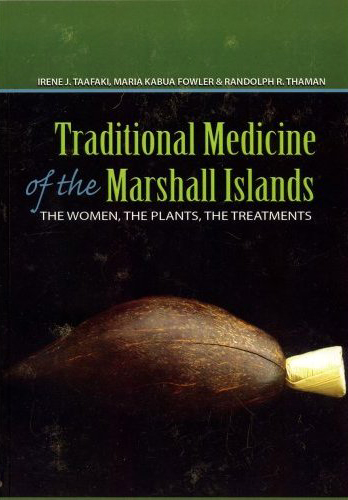
Traditional Medicine of the Marshall IslandsThe Women, the Plants, the Treatments
This book is an attempt to ensure that traditional knowledge is not lost and that ecosystems are protected for future generations. It is the result of a collaboration of nine expert Marshallese healers, members of clans who possess their own special medicines, and numerous others who are familiar with folk or general remedies. It describes more than 270 traditional medicinal treatments, all of which use the plants of the Marshall Islands.
Buy on Amazon ↗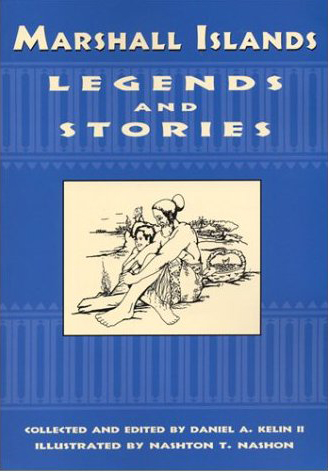
First published 2003
Marshall Islands Legends and Stories
A lively collection of tales. Daniel A. Kelin II preserves the qualities of oral storytelling in fifty stories recorded from eighteen storytellers on eight islands and atolls. The book includes something for everyone: origin stories, tales of mejenkwaad and other demons, tricksters, disobedient children, wronged husbands, foolish suitors and reunited families, all relaying the importance of traditional Marshallese values and customs. Profiles of the storytellers, a glossary and a pronunciation guide enrich the collection.
Buy on Amazon ↗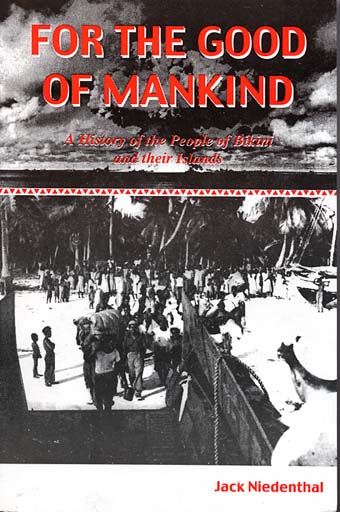
First published 2001
For the Good of MankindA History of the People of Bikini and Their Islands
Bikini Atoll was the site of 23 nuclear detonations by the United States between 1946 and 1958. Former Bikini Liaison Officer Jack Niedenthal’s history of that era draws heavily on oral testimony from the Bikinians themselves, beginning with the Sunday in February 1946 when Commodore Ben H. Wyatt asked the islanders to leave their atoll temporarily “for the good of mankind and to end all world wars,” and King Juda answered, “We will go believing that everything is in the hands of God.”
Read moreShow less
The book follows the Bikinians from that first removal ahead of Operation Crossroads through decades of displacement: their struggle to make sense of the science reshaping their islands, alongside the day-to-day work of finding food, raising families and holding onto their culture amid Cold War forces largely outside their control.
What readers say
“I thoroughly enjoyed the book, particularly reading the history of Bikini in the words of the people. The book assures that these traditional stories will be available for others to read, but perhaps most importantly, for younger generations of islanders.”— Allen P. Stayman, U.S. Compact of Free Association Negotiator, 1999–2001
“A compelling account of the troubled history of the people of Bikini Atoll. Niedenthal’s skillful use of oral history enables the Bikinians to tell much of their own story… a welcome and useful contribution to Pacific Islands studies.”— Robert C. Kiste, Director, Center for Pacific Islands Studies, University of Hawai‘i