



Enewetak Fact File
Also spelled: Ānewetak · Eniwetok
296
People · 159 male, 137 female
40
Islets
2.26
Land, sq miles
387.99
Lagoon, sq miles
Figures: RMI Census 2021 · Checked October 2026
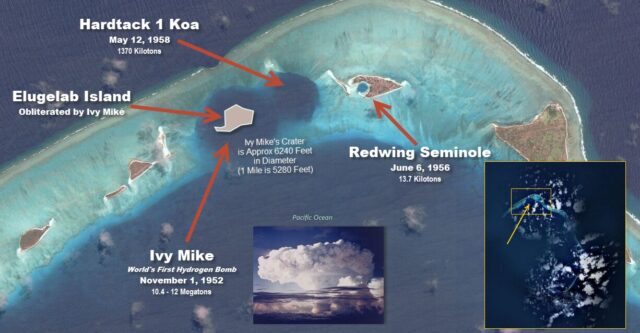
Between 1948 and 1958, Enewetak Atoll witnessed 43 American detonations including the first hydrogen bomb test in late 1952 as part of Operation Ivy. This test vaporized the islet called Elugelab. Unlike Bikini, however, Enewetak has been partially resettled. From 1977 to 1980, the US carried out a $200 million nuclear cleanup and rehabilitation program. After having lived in exile for 33 years, the people have now lived in the southern islands since 1980.
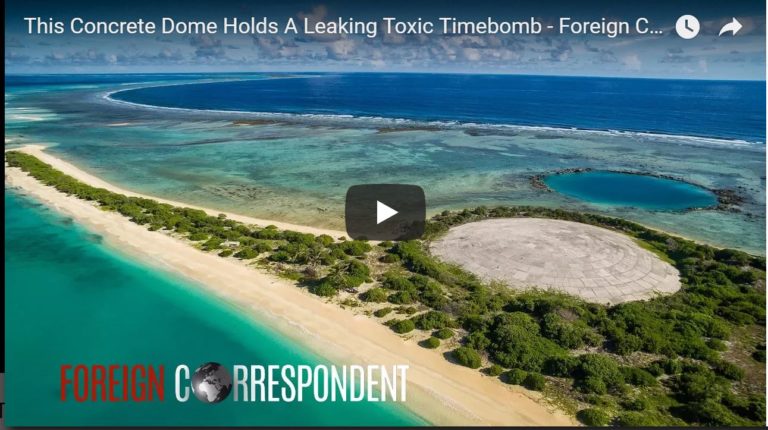
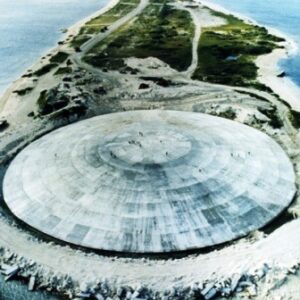
The Runit Dome
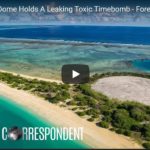
Over 2.5 million people subscribe to a YouTube channel called Be Amazed. In April, 2018, the group did a clip on Enewetak’s Runit Dome (see video below). They kindly gave me permission to use the video and here’s what they wrote on YT: “You’ll be amazed by this dome hidden away on a remote secret island. The Marshall Islands is an island country of a little more than 50,000 people, spread out across 29 coral atolls, one of which you see here.
“This is Runit Island, one of more than 1,100 individual islands and islets making up the Marshall Islands, and part of the Enewetak Atoll. Seen here, it looks like a peaceful spot to vacation, with palm trees, blue waters, and sandy beaches. The dome itself, sometimes called the “Cactus dome” or “the Tomb,” is a bit unsightly, but hey, it could be paved over and we could build a mini-mart, right? Well, not so fast. While many of the other islands are inhabited and pleasant places to visit, Runit Island will be uninhabited for a very long time—at least 24,000 years, probably more.
The island itself is considered too remote to be guarded, so anyone can visit by boat—but I wouldn’t want to hang out there for an extended period of time. The dome is built in the crater of the “Cactus test”—a nuclear test conducted on Runit Island in 1958. The hollowed-out crater left behind by the nuclear blast was filled with radioactive waste from the Cactus and other nuclear tests the US conducted during the Cold War, between 1946 and 1958. After three years of cleanup, the dome was covered with concrete.”