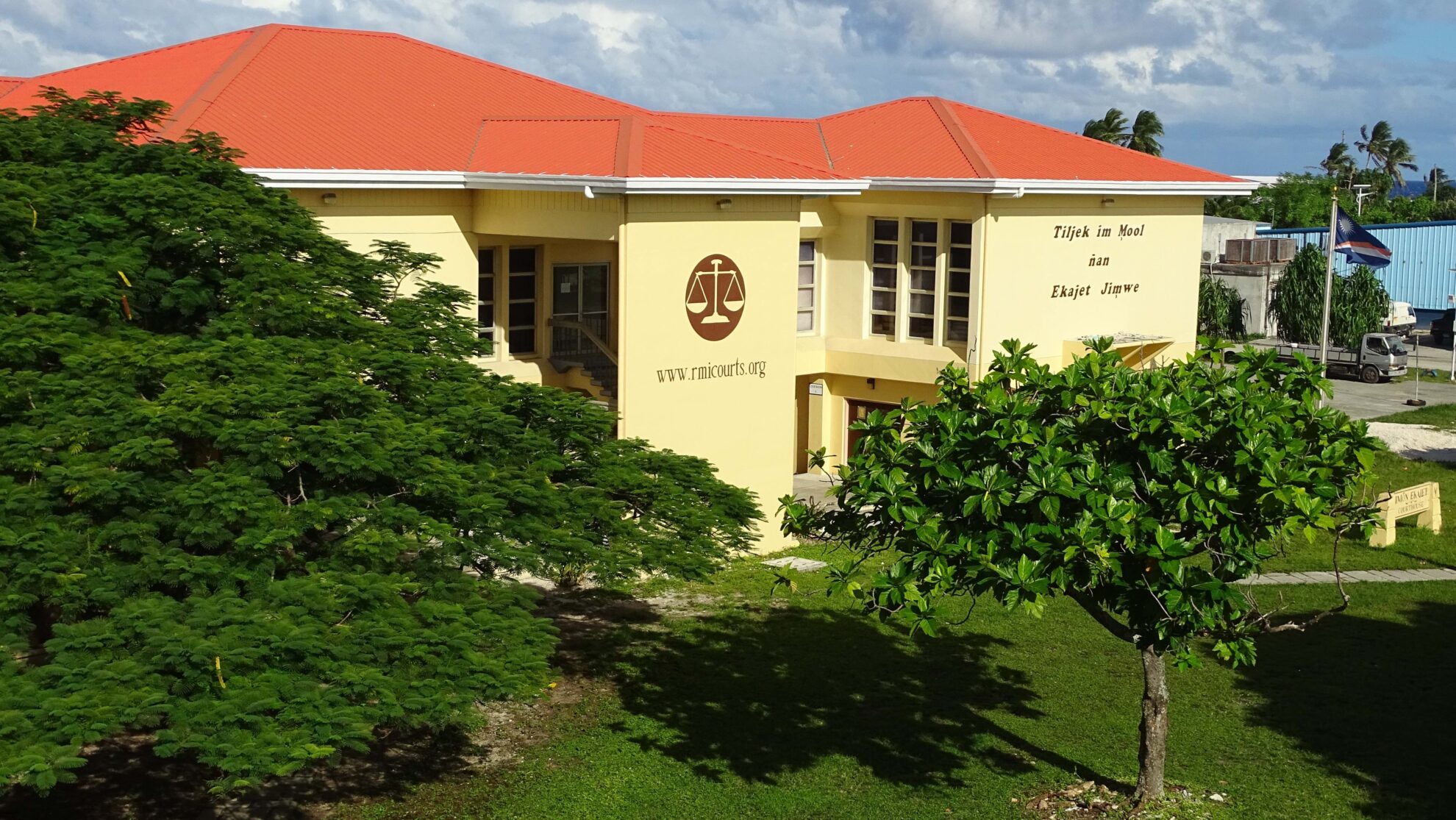
The Marshall Islands court system is a well-run and managed entity. Follows is the breakdown of the courts from their excellent website. The site “reflects the Judiciary’s continuing commitment to providing access to justice, contains a number of resources.” I have embedded it below and recommend you use it as a resource.
The Supreme Court
This is a superior court of record with final authority to adjudicate all cases and controversies brought before it. It consists of a chief justice and two associate justices. The current chief justice is Daniel N. Cadra, an American who was appointed to a 10-year term in September 2013. Generally, associate justices have been pro tem judges from other jurisdictions, e.g., the United States Ninth Circuit Court of Appeals, the United States Federal District Court in Hawaii, the Republic of Palau, the Commonwealth of the Northern Mariana Islands, and Canada.
The High Court
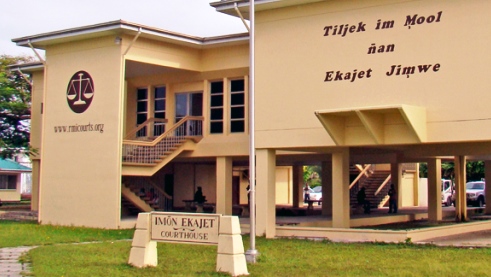
The High Court is a superior court of record having general jurisdiction over controversies of law and fact in the Marshall Islands. The High Court has original jurisdiction over all cases properly filed with it, appellate jurisdiction over cases originally filed in subordinate courts, and, unless otherwise provided by law, jurisdiction to review the legality of any final decision of a government agency. The High Court is led by Chief Justice Carl Ingram.
Traditional Rights Court
The Traditional Rights Court (“TRC”) is a special-jurisdiction court of record consisting of three or more judges appointed for terms of four to 10 years and selected to include a fair representation of all classes of land rights: Iroijlaplap (high chief); where applicable, Iroijedrik (lower chief); Alap (head of commoner/worker clan); and Dri Jerbal (commoner/worker).
The jurisdiction of the TRC is limited to questions relating to titles to land rights or other legal interests depending wholly or partly on customary law and traditional practices.
District Court
The District Court is a limited-jurisdiction court of record. It consists of a presiding judge and an associate judge.
The current District Court judges are lay judges who receive specialized training. The District Court has original jurisdiction concurrent with the High Court (i) in civil cases where the amount claimed or the value of the property involved does not exceed $10,000 and (ii) in criminal cases involving offenses for which the maximum penalty does not exceed a fine of $4,000 or imprisonment for a term of less than three years, or both.